ChatGPT Scored Us 9.1. Gemini Couldn't Find Us. Both Were Right.
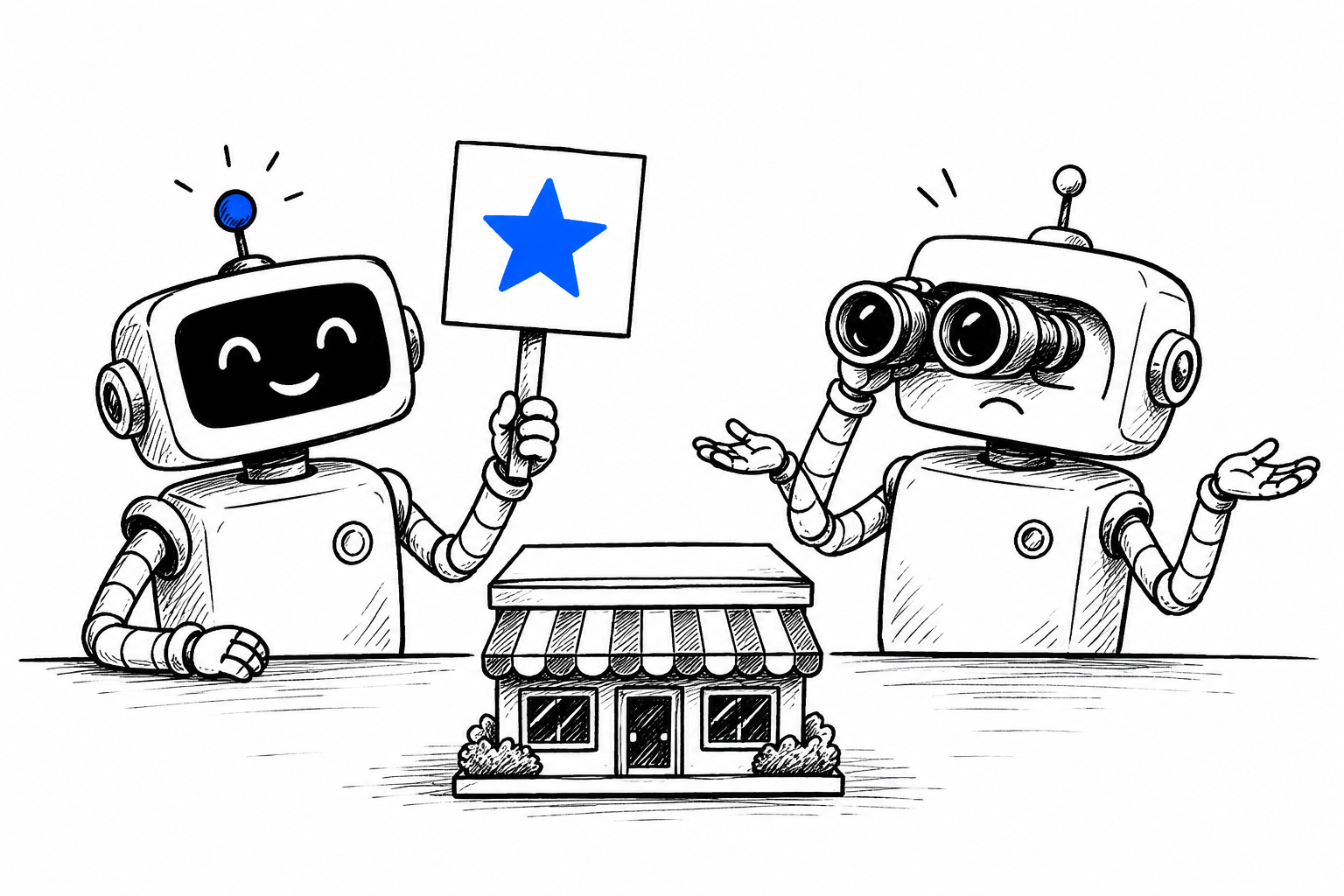
I ran a blind test on my own service. I asked ChatGPT to recommend Hungarian AI-visibility providers — across two rounds it named thirteen companies, and MI-Térkép wasn't in either list. But when I asked about it by name, it analysed the site with live search, and at the end of a from-scratch market survey of more than twenty players it ranked MI-Térkép first, at 9.1 points. Gemini, given the same task, scored five providers — MI-Térkép nowhere. That is not a contradiction. It is this trade's most important lesson, delivered live, on my own skin.
The measurement date is 9 August 2026. The full ChatGPT conversation is readable at a public share link — you'll find it in the sources. I'm not showing curated excerpts; I'm showing what happened.
What exactly happened?
The first question was innocent: I asked for Hungarian providers who optimise for AI search. ChatGPT recommended three international and then, in two rounds, ten Hungarian names — all real, operating businesses. MI-Térkép was not among them. When I asked whether it had heard of mi-terkep.com, it ran a live search, read through the methodology, the prices and the blog, and corrected upward step by step: first eight points, then nine. At the end I asked it to restart the entire market survey from zero and rank everyone by the same criteria. The new list had MI-Térkép at the top.
I also asked why it had been left out of the first rounds. The answer is worth more than any of the praise: its searches ran on the category's keywords — GEO, AEO, AI SEO — and my brand name contains none of them. What is an advantage in differentiation is a handicap in discovery.
Gemini was the harsher judge — because it saw less
Gemini received the same blind-test question, with the explicit instruction not to search only for the GEO keyword. It scored five Hungarian providers on a ten-criteria rubric, with strikingly tight results between 81 and 86 points. MI-Térkép simply did not exist for it.
Looking closer at the answer, its working material became visible: a handful of Google results and one Hungarian SEO blog's industry roundup, whose name appeared as a source next to almost every provider it evaluated — sometimes in the wrong place, attached to another company's claim. Gemini did not research. It summarised what the search engine put in front of it. Whoever isn't in the result lists and the roundup articles isn't a provider to Gemini — just empty space.
Why are both results true at once?
Because they measured two different things. ChatGPT's detailed analysis measured what the service is like once AI can see it. The two organic recommendation lists and Gemini's answer measured whether AI finds it at all. And between the two sits the gap this whole trade is about: visibility doesn't run on quality. It runs on external presence.
My own methodology gives the largest of the seven dimensions' weights, twenty-five percent, to external presence — precisely because the bulk of AI recommendations feeds on third-party sources: roundups, directories, mentions. The blind test confirmed that weighting with uncomfortable precision: the site's technical score was high, its external presence was thin — and both models behaved exactly as the methodology predicts. This is also what the difference between a GEO score and an AI recommendation is about: readiness is the entry ticket, presence decides the recommendation.
AI doesn't recommend whoever is best. It recommends whoever it finds — and has heard about from someone else.
What did I change after the measurement?
The blind test wasn't made as marketing material but as a diagnosis, so what matters is the to-do list. I made three moves immediately. The largest static text on the homepage now addresses AI by the category's name, not just people. My business data went into external directories, with structured data tying them to the site. And monthly AI visibility monitoring is now live — the same measurement this article shows, just done regularly, dated, compared against competitors. What I recommend to my clients, I run on myself first.
One thing I am not changing: the brand name. ChatGPT's diagnosis is correct — the MI-Térkép name carries no category keyword — but you don't name a business for the searches; you name it for the clients. Keywords belong in the title, the description, the structured data and the external mentions. The name belongs to trust.
If you're curious what this same test would make of your business: the free mini-check runs exactly this for your trade and your town — two AI models, dated.
Frequently asked questions
What exactly was the blind test?
On 9 August 2026 I asked ChatGPT to recommend Hungarian AI-visibility (GEO) providers. Across two rounds it named thirteen companies without MI-Térkép. I then asked about it by name, and finally requested a from-scratch market ranking by identical criteria. The full conversation is readable at a public share link.
Why did ChatGPT leave MI-Térkép out of its recommendations?
By its own explanation, its searches ran on the category keywords — GEO, AEO, AI SEO — and the MI-Térkép name contains none of them. Discovery is driven by keywords and third-party mentions, not by service quality.
Why couldn't Gemini find it at all?
Gemini's answer leaned on a few search results and one Hungarian roundup article, and it only scored providers that appeared there. Whatever is missing from the result lists and roundups does not exist as a provider for Gemini.
Does the 9.1 score mean MI-Térkép is the best Hungarian GEO provider?
No. It is one model's one analysis, based on public information — not an objective market ranking. I'm publishing it because the omission and the high score together demonstrate that visibility and quality are two separate things.
What should a Hungarian SME take away from this?
That AI recommendation doesn't depend on how pretty your website is but on external presence: mentions, directories, reviews and category keywords. That is why external presence carries the largest weight of the seven dimensions — and why the situation is measurable rather than guesswork.