
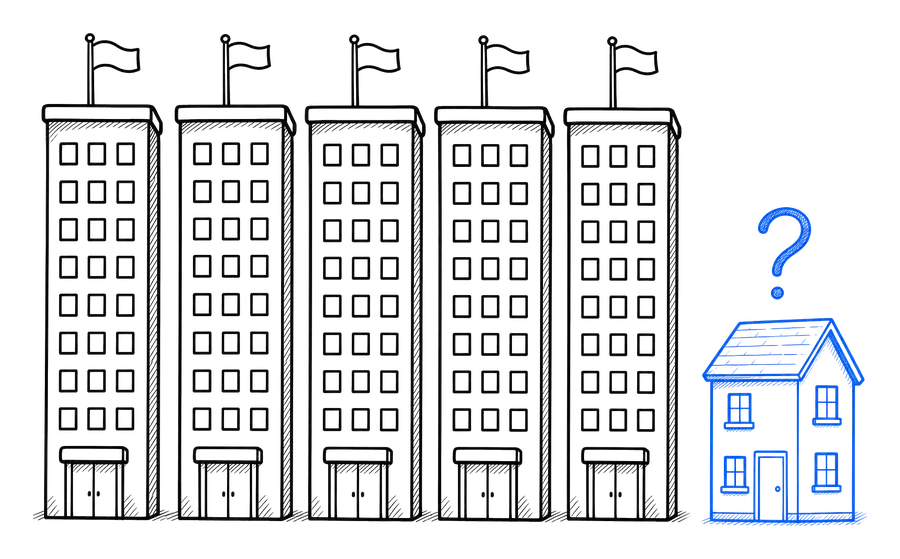
When someone asks an AI for a recommendation in your trade, they get two or three names. Is yours one of them?
It doesn't badmouth the rest. It just never says their names. Enter your website address and I'll show you, for free, which side you're on.
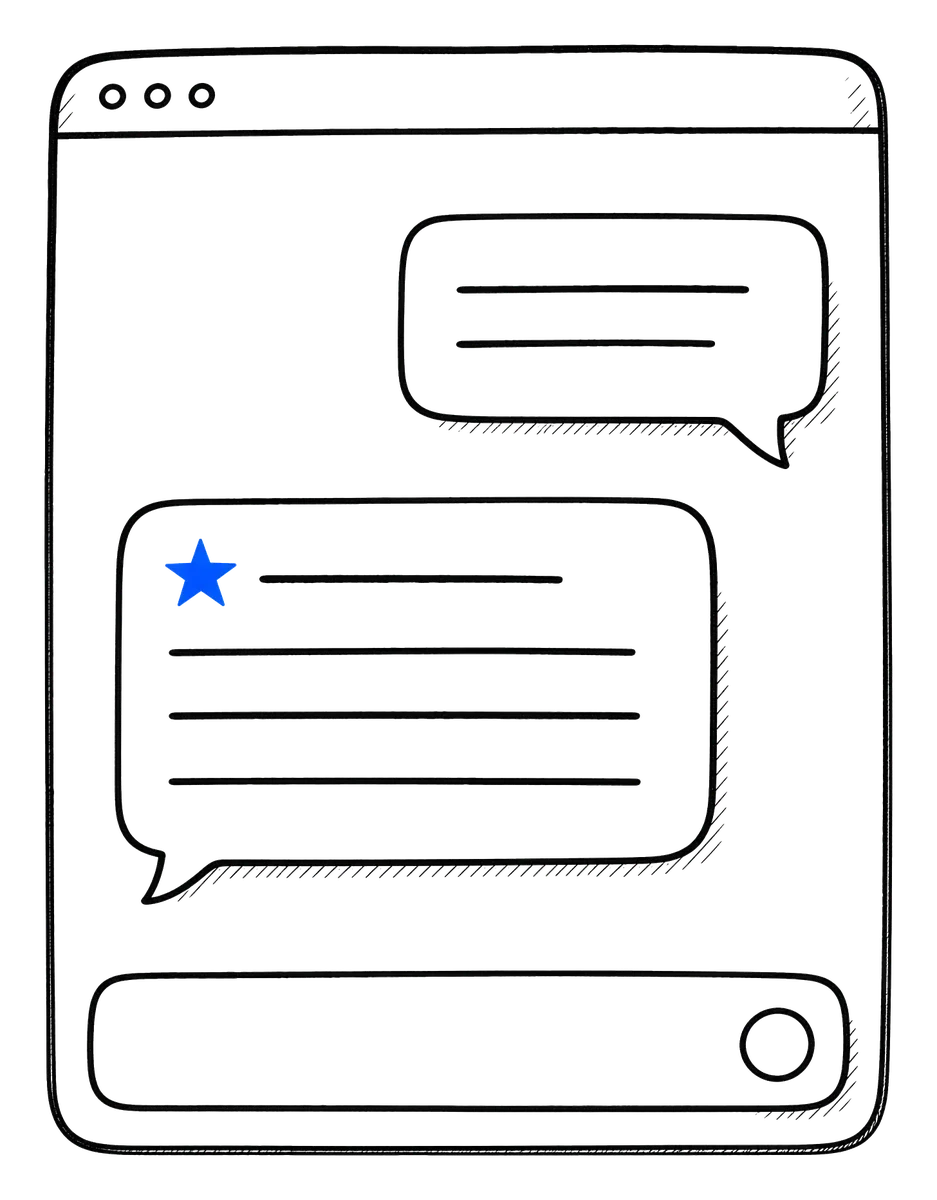
A typical AI answer made-up example
The rest: not in the answer
This is what an AI answer looks like. The free mini-check shows who it names in your trade.

Three minutes: what the measurement looks like
I ask ChatGPT an everyday question, look at which names it gives and where it took them from, then show what it takes for yours to be among them next time.
The film also covers how an AI answer differs from a list of ten search results. SEO vs GEO: the difference
What does AI say about you today?
I asked several leading models the same question your customers would ask when they look for a business.
Which is the best dental clinic in Budapest for implants? Give me five specific names.
My own measurement, May 2026, asked in Hungarian. I asked the models without letting them search the web and logged the answers: in that mode they answer only from what they learned in training.
There is no single, predictable list of who AI recommends. Every system picks by its own logic, yet the customer sees one answer.
What ChatGPT said
What Gemini said
the same clinic
Of the five names in each list, only one clinic appeared in both. What one model ranked as its top recommendation did not show up at all in the other.
In a smaller town, AI doesn't mention your business at all
When I asked the same local question about a smaller town outside the capital, neither model named most of the real, well-run local dental practices.
A customer doesn't ask three models and doesn't check the names they get. They pick the first one the AI hands them. And it isn't only dentists: the same thing happens when someone looks for an accountant, a mechanic, a lawyer or a builder in their own town.
What independent measurements show
- 89%According to Bain & Company research, AI answers about 89% of customers' unbranded questions from third-party sources, not from the company's own website (2026).
How does it work, and what do I measure against?
Three steps, and the first costs nothing. The scoring system I measure against is public.
- Free mini-checkI put the questions your customers really ask to the AI models, several times over, and show you who gets recommended instead of you and which sources the AI relies on.
- Full audit and Competitor MapI score your site along seven weighted dimensions, then show against one specific competitor who is visible to AI today and why, and who isn't.
- An action plan, vendor-independentConcrete steps in order of importance, in a form any developer or agency can price.
You don't have to go through all three: after the mini-check you decide whether it's worth going further. I describe the seven dimensions and their weights on the methodology page, the full process on How it works, and the price bands on Pricing.
An honest note: a GEO score is not an AI recommendation. A good technical score still doesn't guarantee that ChatGPT or Gemini will recommend you. Recommendations are decided mainly by the number of reviews, the age of the brand and presence in independent sources.
Your competitors are visible in AI by accident. I make you visible on purpose.
See the methodology See the sample report (in Hungarian)

Frequently asked questions
What is GEO?
GEO (generative engine optimization) means your website is prepared not only for Google but for AI search too (ChatGPT, Gemini, Perplexity), so these systems can find it, understand it and quote it. Classic SEO aims for a good ranking; GEO aims for the AI to actually name you in its answer.
Do you guarantee that AI will recommend me?
No, and anyone who promises that is misleading you. A GEO score is not an AI recommendation: recommendations are decided mainly by the number of reviews, the age of the brand and presence in independent sources. What I commit to is measuring the real situation accurately and giving you a realistic plan to build your visibility on purpose.
How long does it take?
The free mini-check is ready in a few days and already shows whether you appear in AI answers. The full audit with the competitor comparison and the action plan usually takes one to two weeks. I always agree the exact deadline with you in advance.
How much does it cost?
The entry-level Snapshot is priced for small and mid-sized businesses, and the full audit scales with the job. You'll find the exact bands on the Pricing page, and many improvements may be eligible for Hungary's DIMOP Plusz grant.
How do you know what AI answers about my business?
I ask the leading AI models the questions your customers would ask (for example, who is the best provider in your trade and your town), each one several times, and I record who is named in the answer, who is left out, and which sources the model relies on. I date every measurement, so you can look back at it later. I don't guess: I show what the models actually answer.
Is this audit worth it in my industry?
It isn't only dental practices: the same thing happens when someone looks for an accountant, a mechanic, a lawyer or a builder in their own town. The free mini-check shows, at no risk, where you stand in your market. If the measurement shows the audit isn't worth it right now, I'll tell you honestly.
What do I get with the free mini-check?
I put the questions your customers really ask to the AI models, each one several times, because the answers change. I look at who gets recommended instead of you and which sources the AI relies on: that shows why them, and not you. You get the result in writing, with the date on it. This first step costs nothing and commits you to nothing. If you only want to know where you stand, you can stop there.
Transcript of the film
Search is going through its biggest change since Google, and most businesses aren't ready for it. If you run one, hear me out.
I'm Dávid Kindl. Well, his AI avatar, to be precise. I measure how visible businesses are to AI. Let me show you what I mean.
I asked ChatGPT to recommend a good used car dealer in Kilkenny, in Ireland. This is the answer: three dealers, with ratings and phone numbers. Next to each pick, ChatGPT shows its source.
The first pick, Marble City Motors, is cited from its own website, its About page. The other two are cited from Carzone, a listing site.
I asked the same question five times in twenty minutes. The third name kept changing. Marble City Motors came first all five times, and in three of the five answers, the source was its own website.
For twenty years, you typed a question into Google and got ten links. SEO was built on getting higher on that list.
Now people ask an AI and get one finished answer. That new ground has a name too: GEO, optimizing for AI answers.
The AI builds its answer from what it can read: websites, reviews, listing sites. A page it can't read doesn't exist for it. It names two or three businesses, not ten. Whoever is left out, the person asking never sees.
In June I measured more than sixteen hundred business websites in Hungary, where I'm based. Fewer than two in a hundred reached the top grade. For eight in ten, the biggest gap was the same: the site had no short summary written for AI, saying who they are and what they do. The field is still wide open.
Why now? Because an AI doesn't learn about you the day you fix your website. Whether it searches the web or answers from what it already learned, it can take months before your changes show up in its answers.
That's why whoever starts now is months ahead when the others notice. And the others still have to wait those same months.
One question is left: is your name in the AI's answer?
Send me your website address, and I'll find out for free. I put the questions your customers really ask to the AI models. Each one several times, because the answers change. I look at who gets recommended instead of you, and which sources the AI relies on. That shows why them, and not you. You get the result in writing, with the date on it. It costs nothing and commits you to nothing.
Tonight, someone will ask an AI where to go. And the AI will answer, with you or without you.
What do you get with the free mini-check?
I put the questions your customers really ask to the AI models, each one several times, because the answers change. I look at who gets recommended instead of you and which sources the AI relies on: that shows why them, and not you. You get the result in writing, with the date on it. This first step costs nothing and commits you to nothing.
If the measurement shows the audit isn't worth it right now, I'll tell you honestly.